This week in DistroWatch Weekly: Review: Ubuntu 20.10News: ReactOS hires a kernel developer, Ubuntu speeding up Snap package load times, upgrading Fedora Silverblue, Linux Mint builds its own Chromium packageQuestions and answers: Considering a Microsoft Linux distroReleased last week: Fedora 33, FreeBSD 12.2, NixOS 20.09Torrent corner: Fedora, FreeBSD,....
from DistroWatch.com: News https://ift.tt/3kPoASz
via IFTTT

The Latest News from Across the FOSS Universe
Sunday, November 1, 2020

Linux Lite 5.2 Released, Available to Download
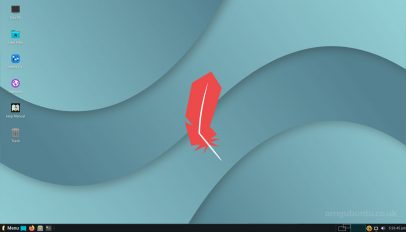 Linux Lite 5.2 is the latest stable release of this lightweight Linux distro and based on Ubuntu 20.04.1 LTS and Linux kernel 5.4. We check out what's new.
This post, Linux Lite 5.2 Released, Available to Download is from OMG! Ubuntu!. Do not reproduce elsewhere without permission.


from OMG! Ubuntu! https://ift.tt/2HUeHo5
via IFTTT
You Can Now Upgrade the Original PinePhone with More RAM, Storage
 Owners of the original PinePhone can now upgrade their device with more RAM and storage. Higher spec’d mainboards for the Pinephone, which will be of particular interest to BraveHeart and Ubports Community Edition owners, went […]
This post, You Can Now Upgrade the Original PinePhone with More RAM, Storage is from OMG! Ubuntu!. Do not reproduce elsewhere without permission.


from OMG! Ubuntu! https://ift.tt/3jMdQmB
via IFTTT
Distribution Release: Voyager Live 20.10
The Voyager Live project has published a new version of their desktop distribution. The new release, Voyager 20.10, is based on Ubuntu 20.10 and offers nine months of package updates and security fixes. "I introduce you Voyager GE 20.10 which continues the adventure with the GNOME Shell....
from DistroWatch.com: News https://ift.tt/35M8gvi
via IFTTT
from DistroWatch.com: News https://ift.tt/35M8gvi
via IFTTT
Watch Audi RSQ8 Drag Race Against Tesla Model X And Lamborghini Urus
It’s always interesting to see ICE cars drag racing against electric cars. The scene gets even more exciting when we have a Tesla car representing the EVs. Today, we came across a similar race in which a modified Audi RSQ8 went against Tesla Model X P100 D and Lamborghini Urus on a drag strip.
Recently, YouTube channel DragTimes organized an event featuring these three impressive SUVs in action. DragTimes is a racing channel where its chief Brooks Weisbalt organizes drag races for entertainment purposes.
In his recent video, Brooks tested a modified Audi RSQ8 against stock Lamborghini Urus and Tesla Model X P100D.
Here’s a quick overview of all the cars participated in the show.
Also Read: Tesla Model X Vs Audi e-tron: Most Anticipated Race
Tesla Model X P100D

The guy in the video said that Tesla Model X is a couple of years old, and it doesn’t have Cheetah mode. However, we assume it’s a 2018 model, a top-end variant Tesla Model X P100D with Ludicrous mode.
The electric SUV has dual motors with all wheel drive configuration and has a total power output of 588 WHP (approx. 789 BHP).
Audi RSQ8

The Audi RSQ8 we have here is a modified one. It’s powered by a 4.0-liter twin-turbo V8 engine with Excell Racing Tune Downpipes Capristo Catback Exhaust. With these modifications, the total engine output is 696 WHP (800 BHP).
A stock Audi RSQ8 without any modification produces around 582 BHP.
Furthermore, the engine is paired with an eight speed automatic transmission. Also, similar to Model X it’s an all wheel drive SUV.
Lamborghini Urus

As per the YouTuber, both Lamborghini Urus and Audi RSQ8 are based on the same platform. The same twin-turbo 4.0-lite V8 engine powers them. However, the stock Urus makes slightly more power than a stock RSQ8, which is about 641 BHP.
Similar to Audi RSQS, the engine is meshed with an eight speed automatic transmission and also it has an all-wheel drive configuration.
So without any further ado, let’s begin the showdown.
Audi RSQ8 Vs Lamborghini Urus

Due to the impressive modification RSQ8 underwent, it easily won the drag race. It took 11.56 seconds for Audi RSQ8 to complete the quarter-mile while touching a maximum speed of 118.73 mph.
On the other hand, Lamborgini Urus consumed 11.82 seconds to cross the finish line at a speed of 115.88 mph.
Audi RSQ8 Vs Tesla Model X P100D
Here in the race, Audi RSQ8 got even better than the previous run and completed the strip in just 11.37 seconds achieving a top speed of 119.75 mph. In contrast, Tesla Model X took 12.32 seconds and couldn’t even cross the 100 mph mark.

This came as a surprise as Tesla Model X P100D with Ludicrous mode has impressive on-paper figures. So, the guys tried it one more time, and the results were pretty much the same.
In fact, Brooks shared a pic of an older performance record of the same Model X, which shows the electric SUV covering the quarter-mile in just 11.2 seconds. Now, the difference is more than a second, which is not something to be left overlooked.
The YouTuber said the owner of the Model X also told the matter to Tesla but unfortunately the service executives said the car is fine and there isn’t any problem.
We hope this problem gets resolved soon as this kind of behaviour is not expected from the world’s most valuable automakers.
It would be a lot interesting if Model X was in perfect condition.
As of now, we can say Audi RSQ8 is a clear winner here. Anyway, do share your views in the comments section guys.
The post Watch Audi RSQ8 Drag Race Against Tesla Model X And Lamborghini Urus appeared first on Fossbytes.
from Fossbytes https://ift.tt/3oKfsAU
via IFTTT
OS Release: OpenIndiana 2020.10
Andreas Wacknitz has announced the release of OpenIndiana 2020.10, the latest version of the project's community effort to keep alive the OpenSolaris distribution and its many popular technologies, such as ZFS, DTrace or Zones. This version updates the MATE desktop environment to version 1.24: "After almost 6 months....
from DistroWatch.com: News https://ift.tt/3kMJnG5
via IFTTT
from DistroWatch.com: News https://ift.tt/3kMJnG5
via IFTTT
Linux Jargon Buster: What are GUI, CLI and TUI in Linux?
When you start using Linux and follow Linux-based websites and forums, you’ll often come across terms like GUI, CLI and sometimes TUI.
This chapter of Linux Jargon Buster briefly explains these terms so that you as a (new) Linux user can understand the context better when these acronyms are used.
To be honest, the terms like GUI, CLI or TUI are not exclusive to Linux. These are generic computing terms and you’ll find them used in non-Linux discussions as well.
GUI – Graphical User Interface
Probably the most common term you’ll across on It’s FOSS. It’s because we focus on desktop Linux users and try to cover the easy to use graphical methods and applications.
A GUI application or graphical application is basically anything that you can interact with your mouse, touchpad or touch screen. You have icons and other visual notions and you can use your mouse pointer to access the functionalities.

On Linux, a desktop environment provides the graphical interface for you to interact with your system. Then you can use GUI applications like GIMP, VLC Firefox, LibreOffice, file manager etc for various tasks.
GUI has made computing easier for the common users otherwise it would have remained a geek-only zone.
CLI – Command Line Interface
CLI is basically a command line program that accepts inputs to perform a certain function. Basically, any application that you can use via commands in the terminal falls into this category.

Early computers didn’t have mouse to interact with the operating system. You had to do interact with the machine using commands.
If you think that’s difficult you should know that the earlier computers didn’t even have a screen to see what is being typed on, they had actual paper printer to see their typed commands. I have never used such a computer or seen in my real life. The closest thing I used was the microcontroller kits during my studies.

Is CLI relevant these days? Absolutely. Commands always have their benefit specially when you are dealing with the core functioning and configuration of the operating system like setting up firewall, managing network or even package management.
You may have a GUI-based application to do the same task but commands give you more granular access to those features. In any case, you’ll find that GUI application also interact with the operating system with commands (used in their code).

Many popular GUI applications are often based on CLI tools. Take Handbrake for example. It’s a popular open source media converter and it uses the FFMPEG command line tool underneath.
Quite evidently, using command line tools is not as easy as the graphical ones. Don’t worry. Unless you have specific needs, you should be able to use your Linux system graphically. However, knowing the basic Linux commands helps a great deal.
TUI – Terminal User Interface (also known as Text-based User Interface)
This is the most uncommon term of the three. TUI is basically part GUI and part CLI. Confused? Let me explain that for you.
You already know that early computers used CLI. Before the advent of the actual GUI, the text-based user interface provided a very basic kind of graphical interaction in the terminal. You have more visuals and could use mouse and keyboard to interact with the application.

TUI stands for text-based user interface or terminal user interface. Text-based because primarily, you have a bunch of text on the screen and terminal user interface because they are used only in the terminal.
TUI applications are not that common but you still have a bunch of them. Terminal based web browsers are good example of TUI programs. Terminal-based games also fell in this category.

You may come across TUI when you are installing multimedia codecs in Ubuntu where you have to accept EULA or make a choice.
TUI apps are not as user-friendly as GUI applications, and they often have a learning curve involved but they are a bit easier to use than the command line tools.
In the end…
TUI apps are often also considered as CLI applications because they are restricted to the terminal. In my opinion, it’s up to you if you consider them different from CLI.
I hope you liked this part of Linux Jargon Buster. If you have any suggestions for topics in this series, please let me know in the comments and I’ll try to cover them in the future.

from It's FOSS https://ift.tt/3ef5rXt
via IFTTT
Subscribe to:
Posts (Atom)
-
Introduction I am aware that it is a while since I added any content to this site. To be honest I have been inundated with work and so I ha...
-
Instagram is the money-making machine of Facebook. According to a report by Bloomberg, Instagram brought in $20 billion in 2019 through ad...
-
Ubuntu 17.10: Unity is gone and gnome shell is in as the default desktop. But how does it function? What about the Linux software and how d...


